SONGS AND SCRIPTS AND DUNKING BISCUITS

Every day tales of a winging-it creative

  • On the 31st October, I returned to my hometown after spending the previous four months – eighteen weeks in all, or 126 days if you prefer – living from my sisters spare room in northern Cumbria.

    This was not planned, or at least not for that long. I expected to be away for a couple of weeks, a month at the most, while the legal stuff went through on my new home. How naïve of me to underrate the ability of solicitors to drag things out. I underestimated how they work to a pace that doesn’t in any way take into account of how it may affect your life, and how impervious they are to criticism and complaint.

    However, I could bang on about this and the archaic system we have in the UK that helps result in 1 in 3 house purchases failing. The government are currently looking at a major overhaul to our centuries old system and I’ll leave it with them.

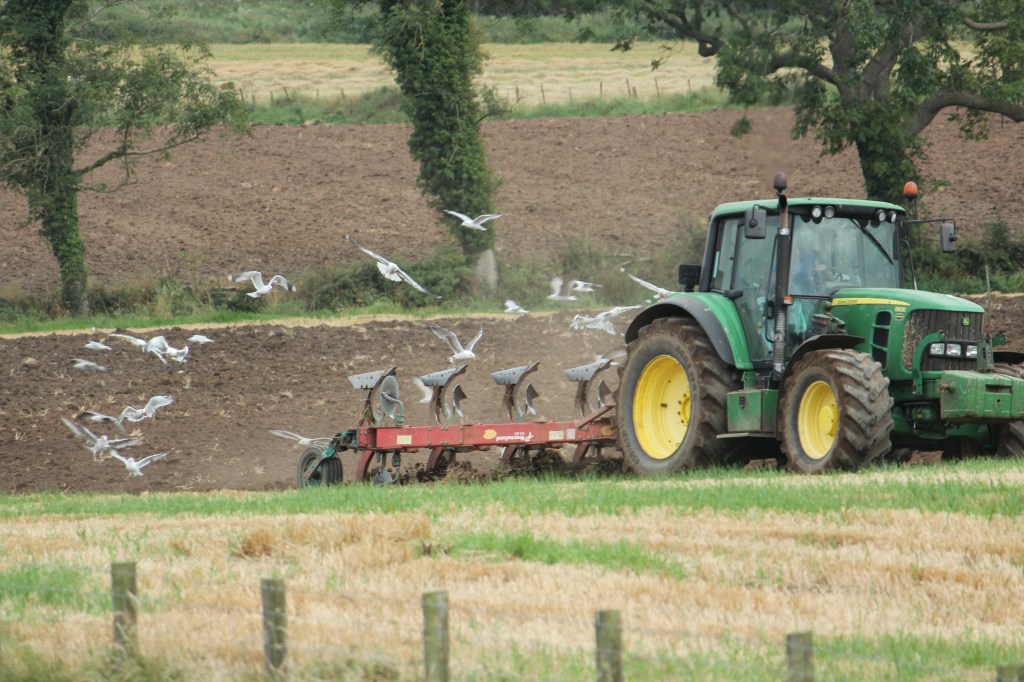
    Fields being ploughed on the farm behind the house, 23rd August 2025. Photo by Paul Ariss

    Instead I’ll look at the positives. I saw a lot more of my family than I normally would. I learned how to drive at faster speeds because as I’ve discovered, out in the country the police are largely absent and speed limits are somewhat open to interpretation and the guy sitting on your taillight at 60mph on a country road apparently has to be somewhere really, really quickly.

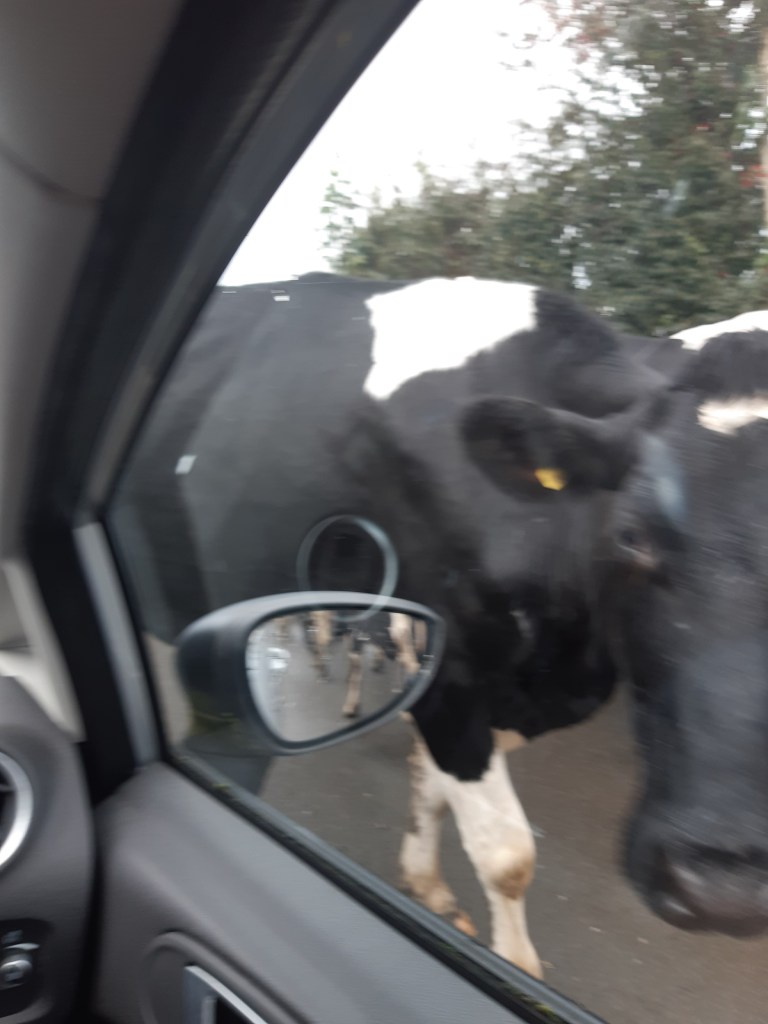
    That said, if a herd of cows or sheep need to get somewhere no-one’s going anywhere until they have ambled past at a pace similar to a solicitor at work.

    You want to get out the car and tell me to hurry up? Photo by Paul Ariss, Barrow, Cumbria

    I woke most days to views of beautiful landscapes and sun-kissed valleys and fields. I learned patience when purchasing anything in the local shop that has queuing systems that are arbitrary and, shall we say, flexible.

    I came to accept, more or less, that to get to a supermarket I may have to drive 12 to 17 miles (depending on the supermarket) instead of my usual 3 miles (depending on any supermarket). But I’ve also seen the seven days a week work in the farms and fields that put a lot of those essential foodstuffs on the supermarket shelf, no matter how near or far.

    Frankly I’ve lost count of the fascinating history lessons from Carlisle Castle and Cathedral in the north of the county, to the birth of a Roman Garrison town at Maryport on the coast. I spent a couple of hours at a Pencil Museum (yes that’s right, a museum dedicated to the pencil) and watched three wonderful productions at a theatre beside a magical lake.

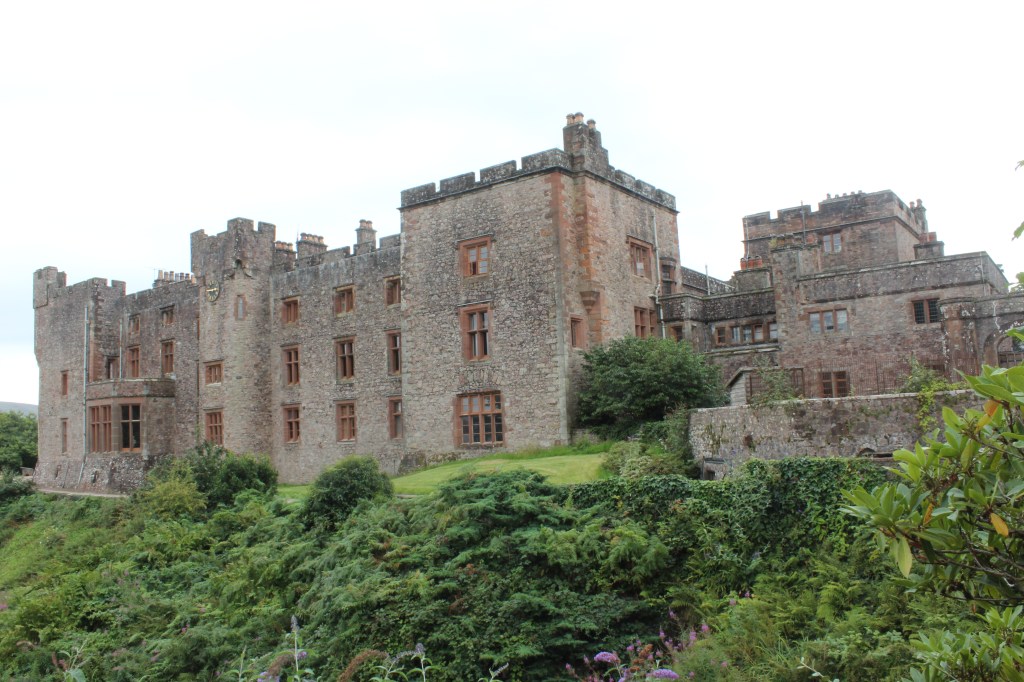
    I’ve nipped out of the county to the home of the Bronte sisters in next door Yorkshire and back again to walk the corridors of a genuinely haunted castle in Muncaster, and learned enough about Beatrix Potter and poet William Wordsworth to regale my friends for hours. Or more likely, until they have a chance to change the subject.

    Muncaster Castle. Photo by Paul Ariss

    There were long, long days when my morale was really low. My life was on hold and I felt utterly powerless to change things. At those points I had to remind myself that I did have the power of perspective; it was summer in a wonderful part of the country, not the dark long days of winter. I was free to roam wherever I chose for as long as I needed to.

    And now I’m having to re-adjust to a different pace again, one that has become unfamiliar, and it’s not coming as easy as I expected. In the towns and cities I know so well I’ve learned having been away that people move differently here, have a more hurried and tunnel visioned approach to their day.   

    But I’m happy to be in my new place, even if for the first two weeks there was no internet (no internet!!) and for a week no hot water. I was boiling water in pans and using public WiFi. So much for returning to civilisation!

    It is going to take a good while for me to see the unfamiliar walls of my new property as home. I’m going to ease back into my creative pursuits alongside decorating, getting to know new neighbours. But I’m embracing change and I’m learning to look forward to a life that takes with it the best memories and lessons of the past as a platform for the future. 

    A future with cows very much in the rear view mirror.


  • As this weird period of my year continues in my sisters spare room, waiting as the legal palaver grinds on and on for my new property 130 miles away, I try and find new ways daily to fill the hours. As I have been here in Cumbria since June 27th (94 days if we’re counting) I am now on the outer limits of imagination.

    I’ve seen many historically and fascinating homes, castles and gardens in this historically rich county. I know so much more than I did three months ago. I’ve seen gorgeous lakes and stunning mountains and woken to the sunlight bathing the nearby fields and I’m grateful for the reflections to nature that being in a rural settings has given me.   

    But last week I decided to move out of Cumbria into nearby Yorkshire for three days to fulfil a long-held ambition to visit Howarth, 111 miles from my present location. Howarth is the village in West Yorkshire famous, in England at least, for being the place where the sisters Charlotte, Emily and Anne Bronte lived.

    With it’s steep cobbled streets this is the quintessential northern town sitting alongside the rolling moors the Bronte’s gained such inspiration from. I built up to going to the Bronte Parsonage and Museum by doing other things first and soaking in the feel of the town. Staying in Main Street in Howarth I was aware the Bronte’s would have passed by this way many times.

    Main Street, Howarth. (Photo by Paul Ariss)

    When I did get to the family home I entered it was an odd mix of excitement, reservation and reverence. The dining room where the family eat and where the sisters would walk around the table sharing ideas, was the first room on the left as I entered. It is the room where Charlotte wrote Jane Eyre, and where Emily wrote Wuthering Heights, two of the greatest works in English literature.

    The Bronte Parsonage and Museum. (Photo by Paul Ariss)

    It was unreal to be there, knowing these walls had witnessed such staggering literary creations. I tried to imagine them bouncing ideas off one another unaware of most of what they were sharing would be inspiring people two centuries on. But this was also the room where Emily passed away at the tender age of 30. Desperately sad.

    And that was the overriding feeling I took away, a feeling of melancholy. Of riches untapped. Anne Bronte, author of the brilliant Tenant of Wildfell Hall and Agnes Grey died aged 29. The Bronte’s talented but troubled brother succumbed to dependence oN opioids and alcohol in his father’s bedroom at aged just 31.

    And Charlotte, just months after her wedding and in the early stages of pregnancy was gone at 38. Of course these were times of much lower mortality rates and this needs to be taken into account. That said, Howarth had a lower life expectancy than most villages of its size. In fact the Bronte’s exceeded the life expectancy of the town, which was just under 26 years.

    The rolling hills of Howarth (photo by Paul Ariss)

    Following his daughters deaths their long since widowed father Patrick commissioned an investigation that highlighted a staggering lack of hygiene in the towns privies, even for the time. One, at the top of the main street where I stayed, had a cesspit below the toilet that often overflowed. A drinking tap was just two yards away from the cesspit.

    The local graveyard was badly designed, resulting in decomposing material seeping into the drinking water. The Bronte’s, whose father was the local parish priest, lived in the Parsonage at the top of the church’s graveyard. It hardly bears thinking about.

    Imagine all that energy, all that creativity and extraordinary energy, then an empty, silent house. It’s hard enough for a parent to exceed the life of one child, let alone six (sisters Maria and Elizabeth died in childhood before they got to Howarth).

    However the short but considerable lifeforce and creativity of the Bronte sisters permeates through not just the town, but through literature. An exhibition room at the back of the house showcases the many film and television adaptations of their work. All from that house, through these tasteful but ultimately modest rooms.

    And though I left Howarth with a feeling of sadness, it was a also with considerable wonder and respect.

  • Jane Austen was born 250 years ago in Hampshire and is regarded by many as England’s greatest female author. Writing in an age when women were not considered to have credibility in the arts she had to fight a society seeped in misogamy and had written both Sense and Sensibility and Pride and Prejudice by the time she was 27 and was still an unpublished author.  

    Knowing I would have time on my hands as I temporarily stay in Cumbria waiting to move house I decided Sense and Sensibility would be on my reading list. Although I’ve already read and enjoyed Austen’s Northanger Abbey I did find Sense and Sensibility a hard read. However I’m glad I read it and having recently bought her whole collection I look forward to whatever my next choice will be.

    Most likely I’ll choose Pride and Prejudice, so when I saw the play was on a run at the Theatre By The Lake in nearby Keswick I wasn’t sure whether to see it or not. I know the gist of the book but why would I want to know more before I read it?

    But as my stay in Cumbria lingered on and the chance of seeing a production at this theatre became increasingly tempting I decided to go in the final week of its run. I wasn’t disappointed.

    Opened and supported by Academy Award winning actress Judi Dench and her actor husband Michael Williams in 1999, and situated alongside Lake Derwentwater, it would be hard to imagine a more beautiful setting for a theatre.

    The Theatre By The Lake, Keswick, Cumbria (photo by Paul Ariss)

    Thankfully the production matched the location. Played very much for laughs and accentuating what a funny writer Jane Austen was, it was a wonderful play with a marvellous cast, almost good enough to warm me through the soaking I’d received in my walk through in Keswick (honestly, drenched. Soaking. I’m surprised I didn’t squelch when I walked). When it rains in Keswick, believe me it rains hard.

    Photo from Theatre By The Lake, Keswick, Cumbria

    So if you’re ever in Cumbria on holiday go to Derwentwater, take in The Theatre by The Lake, even if it’s just a tour of the building. And as long as you take a weather-proof coat, just in case, you won’t regret it.

    Photo by Paul Ariss. Derwentwater Lake, Keswick

  • Photograph by Paul Ariss. Mason Arms, Gilcrux, Cumbria

  • This coming Friday I will be moving out of the house that I have lived in since I was eight years old. The biggest part of my lifetime has been spent within these walls and I am the only one of my family still living here.

    It feels like the right time; I of course have many happy memories here but it’s a large house and in recent years the sadness of the time looking after my ailing father has left a melancholy tinge to it. It needs a new family making fresh memories and giving it a new vitality and reconstruction.

    I am ‘down-sizing’ to somewhere new that will help give me a much-needed energy and independent identity. I’m eager to begin a more streamlined and focused future that is productive and creative.

    Over recent months I have been too wrapped up in the processes of the move to have properly engaged in the emotional aspect of leaving this place I know as home, my sanctuary. But emotions have been starting to seep in the last few days.

    I of course have vivid memories in every room of the house. However, there is a particular room that has always very much been my safe place, my home within a home, and that is the room I now write in and was for many years after moving in, my bedroom. It is the room I’ll miss the most.

    Originally it had Batman and Robin wallpaper (hey, I was 8!) which I used to guard with a possessive pride, but this slowly got replaced by more conventional coverings of footballers and rock stars.

    This was the room I left to take on the banality and the thrills of the world, the room that I left one morning for my first day at ‘grown-up’ school when I was 11, and my first job at 16. I can’t recall how I felt, but it must have been daunting.

    It was here as a 17 year-old I was hit by my first real grinding processing of grief. Its all-encompassing pain suddenly drowned me like the collapsing walls of a dam, as I sat on my bed trying to understand how my mother less than three weeks after her 41st birthday had suddenly died, leaving my near broken father and my two younger sisters, cruelly bereft from losing a young wife and mother.

    I went to my first gig from here, Elton John at the Liverpool Empire on May 4th 1976. I heard for the first-time albums that would wrap themselves into my psyche and remain there. Indeed I wrote my first fledgling song lyrics here, sat by the window dreaming of success, and went out plying my songs, co-written by my then song-writing partner Bob Mouat, to music publishers in London.

    I’ve bounced out of here to attend hundreds of football matches, returning triumphant and ecstatic an obscenely high number of times.

    On Sunday 11th October 1987 I walked out of here with a shoulder bag with a spare shirt, a spare pair of jeans and a camera and by the end of the day I was wandering the streets of Manhattan in the dark trying to find my hotel room on a month-long Greyhound bus inspired journey across the United States, finally getting to the California I’d been day-dreaming about for years.

    Painstakingly I pieced together the jokes that gave me the indescribable thrill of hearing them on the radio in front of a live studio audiences at Broadcasting House at the BBC.

    First date. First heartache. First teenage angsts, first disillusionments, so many Christmas mornings, family weddings, off to meet friends, all from these four walls.

    When I do walk out of this room for the final time I won’t close the door behind me, as I’ll never close the door on the memories from this room that have shaped me and will forever sit in my heart and thoughts.

    I firmly believe a good home over time develops soul and character that goes way beyond just bricks and mortar. I hope to find that again.

    So in the process of moving I will be taking a sabbatical from blogs for the next couple of months. I will still dip in to read them and comment when I can, but I have yet to decide whether to continue writing them, as I concentrate on other creative pursuits.

    In the meantime happy blogging, stay well.

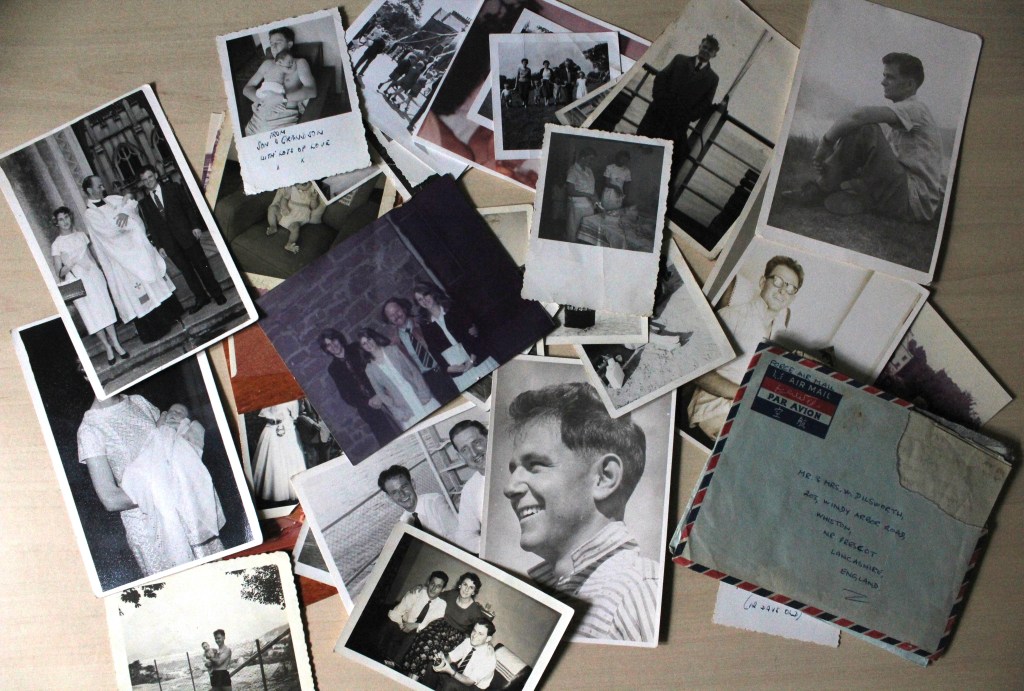
  • My grandfather Gordon Ariss from Birmingham UK, boarded the ship HMT Rohna on the 25th November 1943, along with 1,981 American soldiers.

    The next day the ship was attacked by a wave of German aircraft. They appeared to have weathered the attack until they were hit by a recently devised radio controlled bomb. It proved devastating, hitting the ship just above the engine room.

    Many things were wrong with the HMT Rohna, and one of those was the inadequacy of its lifeboats. My grandfather perished along with 1015 American soldiers, either by the direct hit on the ship or by floundering around in the ocean trying to get on board one of the overcrowded and under supplied lifeboats. A further 35 US military personnel later died from their injuries.

    Gordon Frederick Ariss

    The scale of the tragedy was covered up until several years after the war and was a source of secrecy that meant it wasn’t acknowledged as one of America’s biggest military losses in the way that it should have been. So my link to the United States was indelibly written many years before I was born. It was linked by the shared sacrifice of a family member without whom I simply wouldn’t exist, his blood shed along with by those on board that ship.

    ME AND THE AMERICA OF MY DREAMS

    My relationship with America has always been, I believe, a healthy one. I’ve soaked up its endless highways mysticism, immersed myself in its musical diversity when as a working class English lad it would have been cooler to turn to the exciting rich heritage of my homeland, but something culturally always pulled me Stateside.

    I dreamed of going there and experiencing it as fully as I could, to see whether the myth was simply that. And when I eventually was able to travel its highways and its cities and towns, I discovered it was anything but myth. Everything I imagined about America was real.

    Yet I also saw its imperfections. Its struggling sense of self. It’s inabilities from the vast number of its population to envisage a world beyond its own borders. It’s paranoia about communism lying underneath its society, seemingly always ready to pounce. A constant if sometimes unidentifiable suspicion permeating beneath the surface of its psyche of anything it couldn’t recognise or directly relate to.

    But I realise that I come from a country increasingly divided. A country at odds with an imperial past many refuse to acknowledge as brutal, sadistically cruel, racist and wholly self-serving. My father was in the RAF stationed in Hong Kong which was owned, or more specifically leased, as a direct result of British Imperialism. I was born in Hong Kong so I began life on Imperial soil. Our past greatly influences the way many British people see ourselves.

    With America I’m not so sure. It still has a feel of a work in progress. But lately, under the current administration it feels like a work in decline. From those of us on the outside looking in, it is becoming difficult to recognise its face anymore. What does it stand for?  Is it friend or disinterested acquaintance?

    With its recent willingness to ride roughshod over its constitutional bedrock and relationships with like-minded allies overseas, its ideals are growing less clear daily, both from the outside and from within.

    President Donald Trump only in the last few days, following on remarks made months previously by his lickspittle sidekick J D Vance, has belittled the sacrifice made by allied troops in WW2. This is a massively insulting not only to the millions who died defending the freedoms we all enjoy, but to my grandfather and to his continuing family.

    What sitting American President would ever consider such behaviour?

    OPPORTUNITY FOR CHANGE

    The main chance for meaningful change, it appears to me, is in the desire of its millions of decent people, to face down the injustices being inflicted on their society. Not in violence or insult but in deciding where their moral compass is and heading purposefully in that direction. Invoking the laws that were put in place to stop dictatorial leaders and championing those laws, by speaking out in public arenas and online, in their communities and wherever they have the opportunity to do so.

    This is not an easy thing to do and is easy for me to preach about sitting safely, but I hope not smugly, behind my keyboard. The problem for reasonable people is that they are inclined to behave in a reasonable way, whereas unreasonable people have no qualms about the ways in which they act and whether truth is at the core of their actions. It takes a fundamental and often uncomfortable shift of approach for a balanced and decent individual to stand up and say ‘no more’.

    But the signs are that a shift may be happening. In the deployment of the National Guard and marines in dealing with largely peaceful demonstrations about draconian immigration laws, in LA, people are galvanising. Pushing back. A few days ago I saw a video of a young and morally courageous member of the public stood in front of National Guard soldiers and speak eloquently and passionately against their roles there, and question how it sits with their individual values and beliefs that lay behind their desire to wear their uniforms.

    It struck me how this normal everyday individual was able to speak clearly, strongly and with an articulacy his nations leader has never possessed. But then Trump only needs to speak with a level of clarity his audience can cope with.

    Remarkably this individual was wrongly identified as Wyatt Russell, son of Kurt Russell and Goldie Hawn, even though Wyatt was away filming at the time. This didn’t stop the White House attacking the actor in a typical example of using a lie to further their doctrine.

    HOPE FROM NEAR MY HOMETOWN

    Last week I attended both concerts from Bruce Springsteen in nearby Liverpool. When I first saw him play back in 1981 he was a scrawny livewire still very much carrying a persona shaped from the streets of his New Jersey upbringing. Now he has grown into an elder statesman not only of rock ‘n roll, but of American values.

    To a thunderous chorus of cheers on both of the sell-out nights, Springsteen told the huge audience on Merseyside: “The America I’ve written about, and has been a beacon of hope and liberty for 250 years, is currently in the hands of a corrupt, incompetent, and treasonous administration.”

    He carried on: “Tonight, we ask all who believe in democracy and the best of our American experience to rise with us, raise your voice and stand with us against authoritarianism and let freedom ring.”

    I yearn for the imperfect but stridently aspirational America people like Springsteen speak and sing about, to return. I have no idea whether it will. But I know it has the capability to do so. Quite possibly it is still there, just learning how to shake off the smothering bully that is MAGA.

    Like all of us trying to understand how a democratically elected administration with such low morale core can hijack America, I’m reminded of a few lines from the Springsteen song ‘Long Walk Home’.

    ‘That flag flying over the courthouse

    Means certain things are set in stone

    Who we are and what we’ll do, and what we won’t’

    Each of the 26 times to date I have seen Bruce Springsteen I have felt invigorated. Last week I felt galvanised. For the first time since January I feel there is an opportunity for hope. Only time will tell whether that hope will be realised.

  • Currently my blogging, be it publishing or reading, is struggling as my house move comes closer.

    But you’ve all been there right? Long periods of little happening and then suddenly everything comes at once and you feel as though you still have mountains of stuff to work through and fitting in any creative pursuit feels frivolous and unnecessary when there is legal and financial things that need to be right, items that need to be packed, donated, thrown out, recycled or sold.

    Image from Pixabay

    So forgive the brevity of this and its slightly boastful nature but after years of trying to get a short story published I achieved runners-up prize in a national competition for Writers Magazine recently and the short length of the blog will be made up for by the reading of the short story.

    ‘Guitar Gods and Downward Dogs’ is a comedic tale of a young band who have their perceptions upturned by a seemingly unlikely candidate for their new lead guitarist. Should you wish to do read it thank-you, here is the link:

    https://www.writers-online.co.uk/writing-competitions/showcase/funny-situation/runner-up/