A couple of months ago I went into Scratch studio in Liverpool to have an old song of mine remastered. The song, called The Last Fool on Earth, was recorded in about 1983. See, when I said old, I meant, old.
The lyric was written by myself, and the music by composer Bob Mouat who I worked with in a song-writing partnership till around the mid – 1990’s. I’ve always loved the song, but how good it is I wasn’t sure. As the creator you’re not always the best judge, but I thought if I could put it out with a fairly low-key promotion on a free streaming, easy access service like Soundcloud I’d be able to judge better by people’s reactions.
The original recording was done on a piano and vocal only arrangement, which was fine, but the clarity needed to be enhanced to a suitable level to release. In the level it was at it wasn’t really suitable for widespread distribution.
But the remaster in Liverpool didn’t, at first, go particularly well. Even when enhanced, the piano sounded, small, in terms of impact. The first line of the song, is ‘He plays his Steinway’. This sounded nothing like a Steinway. Overall the recording struggled to stand the test of time.

It had been recorded in Impulse Studios in Wallsend, Newcastle on a songwriting demo service Bob and I often went to. They did incredible work on a small budget, with some tremendous vocalists and we managed to establish some really good relationships in the industry with what we produced with them. The Police demoed there in their very early days.
But back to the present day, at Scratch. The engineer Adam started to put it through Suno software. To use the description used by Suno itself, Suno is AI for Music Creators (I’m trying hard not to put creators in inverted comma’s right now). To give you an idea, they claim to be able to create ten songs a day.
Ten. A day. That’s the equivalent of a human working for 12 hours producing a complete song, including total production, every 120 minutes. The software, computer generated songs may be soulless and without any heart, but despite our protestations to the contrary, not everyone is bothered. It depends what you want them for. For instance, I could imagine the gym I go to would lap them up without having to worrying about paying a Performers Rights fee.
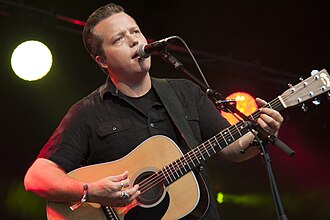
Overall however, this is a creatively slippery slope. Country rock star Jason Isbell along with other musicians has in the last week filed a lawsuit against Suno claiming the software is copying artists identity and style without consent. No doubt others will follow, but as lawsuits drag on, the software advances on also.
At the time I was unaware of Suno, but when the results in Scratch came through, I was amazed. Built from the original recording, the piano suddenly did sound at least like a grand piano, if a little over the top in terms of playing style. But the vocal was stunning, sounding like a top level LA or Nashville studio session singer. The lyric I had written when I was about 24 bounced out of the speakers.
Two months after the session however, the recording is still sitting on my desktop. And that is where it will remain.
Finding your own way through the moral maze
The debate over AI as a creative tool is raging, but ethically I am very sure in my own approach. Even though Bob and I created this song, no human played on this latest version. No human sang on it. Even if I did opt for the low-key promotion, I know it is another tap on the coffin nail of musicians looking for work, even occasional work with someone like myself.
The best I may use it for is a template for taking it in the studio with maybe a young talented pianist coming out of music college looking for studio experience, and a vocalist like Chloe Pownall who I have worked with before and could definitely rival the Suno vocal, but with heart and soul.
Even if I didn’t have a moral problem with the AI version, the major streaming platforms are all now getting in line with rejecting such work, and they are able to pick out and throw out those who try and sneak through.
Of course I could always put out the original version and hope that it’s basic charm could attract people…..but I’m not sure that would work either.
When the now and then becomes the everyday
In the wider creative field of course, AI is becoming more of an everyday tool, a little bit here, a little bit there. It is now becoming the norm. A few weeks ago I asked a blogger in the States who incorporates photography a lot on her site about an image she had put to head her post of a scene which I assumed was in her nearby countryside. I was shocked and a felt a little bit foolish to discover it was AI generated.
So how long then before Artificial Intelligence will learn to create images on such a level and at such quality that there will no longer be a need for a landscape photographer at all? Unrealistic? I’m not so sure. Free photography sites such as Shuttershock and Pixabay can be undoubtably problematic when it came to credits and copyright, but at least it was real people getting out their camera’s and using their skills. I imagine they are getting used less and less as people create their own images in minutes on their PC or laptop.
Popular UK magazine Take A Break not long ago announced they are phasing out short stories written by people in favour of AI generated stories. Their readership may kick back on this but we can’t be certain it will hit sales long term. As the software gets more sophisticated and we incorporate AI into our everyday lives, a new normal will gradually be established.
Take A Break was a great outlet for short story writers looking for their first break (unintentional pun, sorry) but no more. But who will mourn the loss other than writers, who are held in such low esteem anyway, as this decision proves.
Book publisher Harper Collins, a giant in the industry, have decided they are going to use AI to translate foreign language books, and have told their human translators, who have trained and worked in the field for many years, they are no longer needed.
We can get instant summaries now of items and holidays to help us save money. Less and less work for our brains to do. Texting or messaging generally gives us the word we need without having to spell it out. Recently I have found more often I’ve been spelling words incorrectly when typing on my computer. This could be the sign of an aging brain or it could be something accelerated by a dependency on pre-emptive messaging.
However there is a much wider concern, with major experts in the field predicting a growing possibility of the end of humans within a decade due to Artificial Intelligence. The end of our species, all gone. Our families, our friends, ourselves. Everyone.
How then will the undoubted advances AI is currently making in medicine matter?
The waste of our most precious commodity
For thirty years I have been worrying about climate change, back from when someone called me a tree hugger when I wore a Greenpeace t-shirt. Only the most ignorant of what is happening around them would call me a tree hugger now.
Yet frighteningly, Artificial Intelligence has an enormous dependency on water. On a planet with decreasing revenues of this vital life source, AI is likely to increase it’s use of water to almost 7 million cubic metres by next year, according to the British Government. Currently it is just over one million cubic metres. Every time we use AI for quick fix, or someone uses Suno for a smoother vocal progression, it has a small but significant impact on a dangerously growing problem.
So I will resist it everyday as much as I can, even if it means being left behind. No image or written piece of anything I write or publish will knowingly use AI. I will not use it in the song videos I put together. But even I am not naïve enough to believe avoiding it completely is a realistic possibility. The thin end of the wedge grows wider each day, as does the threat to everything we hold dear.


Leave a Reply