SONGS AND SCRIPTS AND DUNKING BISCUITS

Every day tales of a winging-it creative

  • On Wednesday of this week, October 4th, the rail workers in the UK decided to have a ‘day of action’, an ironic term of phrase for a national strike. Pretty much all the trains in the country didn’t run at all.

    This post isn’t about the strike, although I do broadly support their issues to make the decision, but about the way it almost allowed my fears to prevent me from a decades long ambition to see a musical hero of mine, lyricist Bernie Taupin.
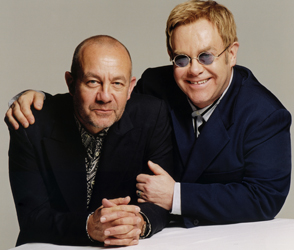
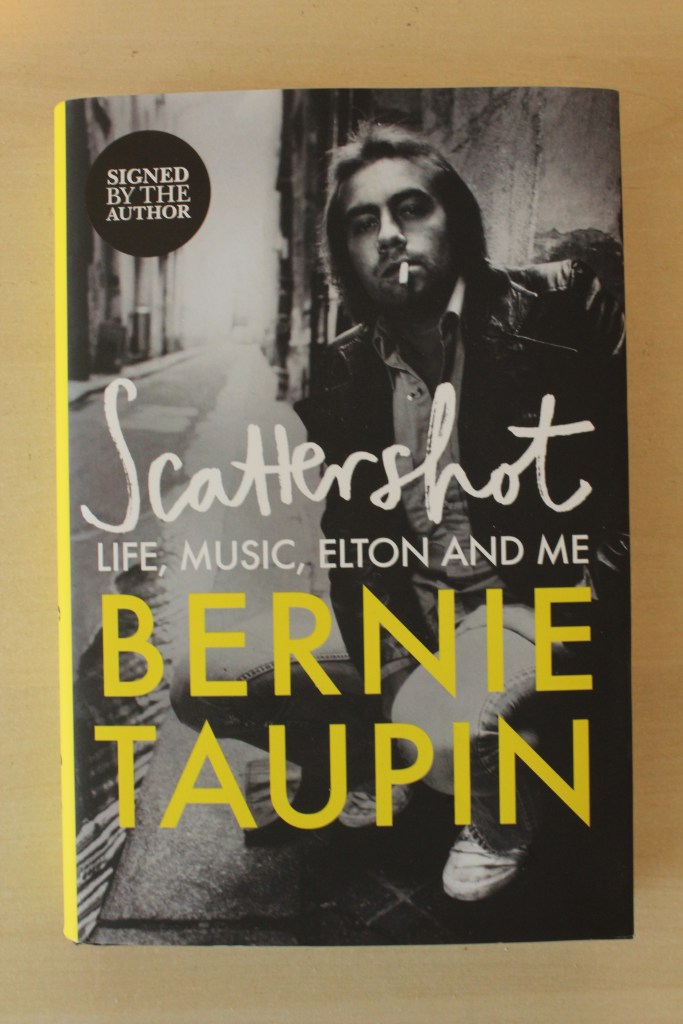
    Bernie, author of all those wonderful lyrics on pretty much every song in Elton John’s long glorious career, has just released his autobiography Scattershot, and to support the release of the book was having three nights in three different venues in the UK to talk about his career. One of those dates was at the Opera House in Manchester, about 25 miles from where I live.

    I eagerly snapped up a ticket as soon as I heard about it. Bernie was the biggest inspiration for me as a teenager as I started out writing lyrics. The album Captain Fantastic & The Brown Dirt Cowboy, an album chronicling in song the early struggling years of his and Elton’s career, completely transformed the way I wrote lyrics, from simplistic easy rhyming love songs to something with far more depth and imagination.

    Without this album, the following years of teaming up with a composer to write complete songs, the memories of meetings with publishers and record labels and working with musicians and in studios quite possibly wouldn’t have happened.

    Okay, we never did hit the heights our ambition reached for, but the memories and the recent revival of my own solo song-writing pursuits have been a huge source of satisfaction and enjoyment in my life.

    So, what does the train strike have to do with this?

    Originally I was catching the train into Manchester and from there a 15 minute straightforward walk to the Opera House. What the strike meant, was that I would have to drive into the city.

    I’ve long held a fear of driving into Manchester, many times I’ve taken wrong turnings and ended up the wrong part of the city or driving the wrong way down a one-way street. It does have a reputation for difficult driving for those unfamiliar with the city. So almost every time I go there, I take the train.

    But then, I had elevated my fear to ridiculous proportions. In truth, I have driven many times into this city, and despite many panicky moments, always got home safely. It’s just that I hadn’t done it for several years. They had in that time introduced a infamously controversial ‘smart-motorway’ system, the bane for even a regular Manchester bound driver.

    For the days leading up to the Taupin event, I was back and forth as to whether I would attend. Every hour seemed to bring a change of mind. At 4.30 am on the day of the talk I decided not to go.

    But then it was also nagging at me that if I didn’t go, this chance wouldn’t come back. What would my 17-year-old self think if I passed up this opportunity? Not just him, but what about my present self?

    So I broke down my concerns into small pieces. I checked the route -again – and looking at it, it wasn’t far from the end of the motorway. I found a parking site and pre-booked a place, so I knew I wouldn’t be driving round and round looking for somewhere to park. I wrote down in detail the streets to lead me to the venue and it all made sense. I decided then, to go.

    I felt much calmer, but this changed at the day wore on, affecting my mood and making me irritable. I knew how ridiculous this was, but that didn’t help. Finally, I had to block out my fears and just do it.

    And I did. Despite moments of trepidation and continually telling myself ‘it would be fine’, I drove to the parking site relatively easily, and in hardly any time at all I was parked in my designated spot. After some trial and error, and with the help of some friendly people, found the Opera House. Had a nice meal beforehand. And at 7.30 that evening, the man who had helped ignite my ambitions and was so influential in my creative life, walked out on stage a few yards in front of me. I was finally in the same room as Bernie Taupin.

    I didn’t enjoy the driving, I did take one wrong turn on the way home. I was tired, my hands were sweating, my tensions high. But the elation for having done it, with my pre-signed copy of the book in my hand as I walked back in the house, overrode everything.
    Do you ever feel your fears grow way out of proportion and stop you looking forward to something that should be pleasurable? I often do, but the thing I fear most, is the feeling of regret and defeat I will have when I let those concerns stop me.

    Thanks Bernie.
  • On a mid-October day back in 1987, I stood alone in Sun Studios in Memphis.

    A few weeks earlier, back home in England, I had caught a documentary about this very room, a high temple of rock history. The documentary was about a how a young, unknown Elvis Presley and his fledging band had toiled here in one long night in 1954 with studio owner and producer Sam Phillips to cut a ballad, to no avail.

    Philips, frustrated and tiring of the process, suggested a break. During the break, Elvis tried to loosen up, and began singing the Arthur Crudup song ‘That’s Alright’ a blues hit from 1947. The band joined in. They were just having fun.

    What they were actually doing, was creating a moment of huge, cultural change. They were lighting a flame that would result in the world of rock and roll catching fire. Thankfully Sam, back in the cramped recording booth, recognised it for what it may be, and flicked the recording button. In those few moments, the 20th century phenomenon called Elvis Presley, was born.

    My morning in Graceland

    The documentary inspired me to visit Graceland on my forthcoming, somewhat loosely planned trip across the US on Greyhound bus. And so it was that despite never being an Elvis fan, I arrived in Memphis and the next morning boarded the shuttle mini-bus to take me through the gates of rock ‘n roll’s most famous home.

    It was an absorbing, but uncomfortable experience. I wandered around Graceland feeling like a voyeur, its rooms frozen in time. Although upstairs was cut-off from the public, I was acutely aware that the man, the son, father, husband, had collapsed in the bathroom above me, a bloated vessel and victim of persistently wrongly prescribed drugs.

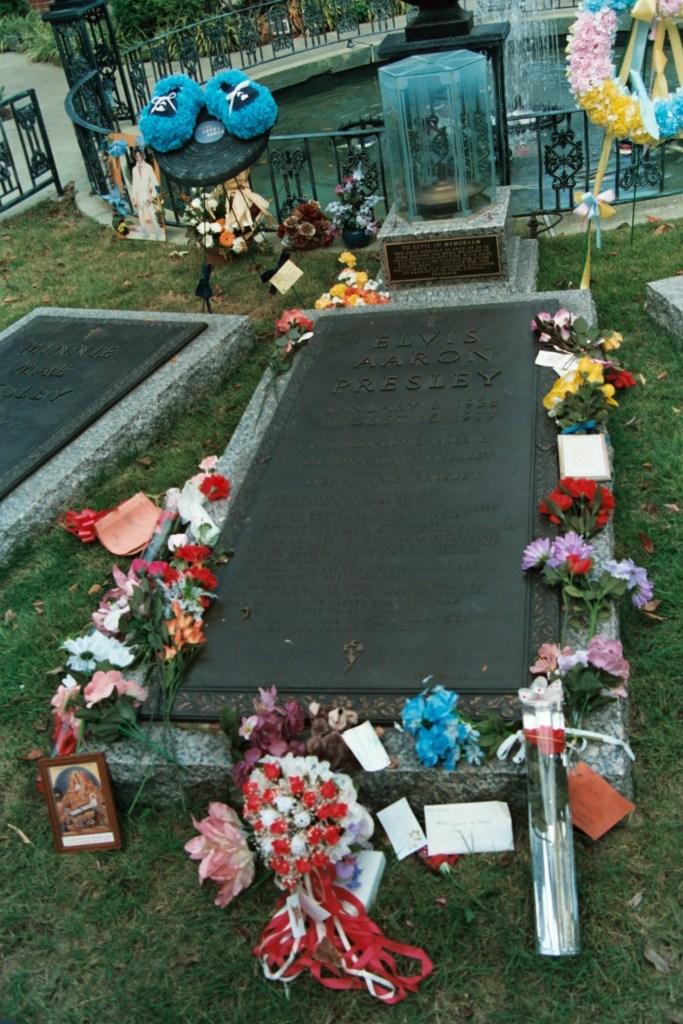
    Alone, I had strolled into the garden out back and somewhat unaware, came upon his grave, next to his mother Gladys and brother Aaron, who died in childbirth. The eternal flame that had stood above Elvis’s headstone, had been allowed to go out. This, sadly, was my most defining memory from Graceland.

    Later, on the other side of Elvis Presley Boulevard, at a mini-mall that sold a depressingly large amount of Elvis souvenirs for the curious, the passionate, and the slightly baffled, I got chatting to a guy called Gary. Gary told me he had just purchased Sun Studios, and asked me if I’d like to visit.

    Would I ever.

    Alone with The King

    As Gary gave me a lift back into the city on a pick-up truck, pointing out to me where Stax Studios had once stood, he told me how Sun had been a hairdressing salon for many years, the studio itself used as a storage room for hairdressing equipment.

    I couldn’t help but think of The Cavern Club back in my home city of Liverpool, the very launchpad of The Beatles, that had been demolished by the short-sighted attitude of the local city council, only to be re-built years later yards from where it originally stood, when the significance and potential tourist pull was finally recognised.

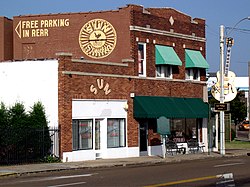
    As Gary and I pulled up outside Sun Studio’s, looking exactly like it should, no longer a centre for blue-rinse conversations, it was hard not to feel overwhelmed by the moment. How was I suddenly here? How I had I suddenly gone from watching a documentary just a few weeks ago thousands of miles away to be stood on this doorstep, completely unplanned? I was fully aware of this buildings immeasurable musical heritage, as I walked into the reception area where Presley had stood many times, begging to get some studio time.

    From the reception space we then stepped through a doorway into the studio itself. It was tiny. At one end was the recording booth where Philips used to sit, exactly as it was. The rest of the space was almost barren, save for a couple of retro guitars and an upright piano.

    On the wall to my right stood a picture of Presley, Johnny Cash, Carl Perkins, and Jerry Lee-Lewis, named as the Million Dollar Quartet who held an impromptu session there in the first few days of December 1956.

    At that moment from the reception area the telephone rang. Gary excused himself, but before doing so flicked a tape machine.

    From speakers on the wall came the recording session for ‘That’s Alright,’ the very same spontaneous performance I’d been transfixed by on the documentary week’s earlier, the performance that had happened pretty much where I was now standing.

    Elvis’s young voice swirled around the room. His band members played along, partly in knowledge, partly on instinct. Sam Philips shouted out occasional encouragement or instruction. History was being created.

    But no-one was physically there. No-one except me, soaking it up, living the most surreal few moments of my life.

    And then those moments were gone. Elvis Presley had left the building.

    The very next month U2 went in there to record their hit ‘Angel of Harlem,’ and the accompanying video, which shows the tiny space packed with one of the biggest bands on the planet.

    By then I was home again. But every year, as the world commemorates the demise of the Rock ‘n Roll King, I recall the day we shared a few moments together at Sun Studios, Memphis, Tennessee.

  • Subscribe to continue reading

    Subscribe to get access to the rest of this post and other subscriber-only content.

  • Subscribe to continue reading

    Subscribe to get access to the rest of this post and other subscriber-only content.

  • How can you be friends with someone for years, maybe even decades, and not realise uncomfortable aspects of their personalities? Their views on the world, their take on current world events based on their prejudices?

    From what I’ve discovered over recent years, it’s very easy. I know a handful of people I am friends with who have expressed opinions based on racial and cultural bigotry. People I have laughed with, shared warm experiences with, and have fond and happy memories with that go back to my youth.

    But now, thanks to that powder keg of self-expression called social media, I have been shocked in the last few years by comments from some friends that show a basic lack of compassion towards those fleeing persecution, and those with a different cultural heritage and skin colour.

    For clarification, I’m only talking about a very small number and none express any kind of violence or social uprising towards anyone. But when faced with statements made based on deep ignorance, it’s hard not to be affected.

    Recently someone told me that he has friends who are black, but due to a lack of sun living in the UK is simply not good for their skin, that they should be in a climate more suited to their pigmentation. When I called out this out as ridiculous and ultimately racist, he was aghast as to why – even though he added that they were friends who he “wouldn’t want living next door”.

    He was genuinely perplexed as to why he would be considered a racist, that he was just expressing ‘fact’, not hatred. I have been friends with this person, on and off, for nearly forty years without any indication he had such views.

    THE MIGRATION MINEFIELD

    The number of people seeking migration in other countries is a huge problem throughout the world, and its root causes such as poverty and oppression are deep, and it’s difficult to see any resolution. Opinion on how to deal with it, particularly when society is fundamentally affected by huge numbers of people seeking asylum, are varied and complex.

    However, when people I thought I knew well post statements that all migrants filling an overloaded dinghy to navigate a treacherous sea crossing are criminals, it is hard not to be taken aback.

    So how then, should I deal with this? The straightforward answer is these people should not have any place in my life. Why would I want to stay on friendly terms with people so intolerant and lacking in basic compassion?

    In the past I have entered into online arguments that been long and protracted and difficult, and ultimately unproductive as both sides have become more deeply entrenched in our views. Then I chose not to engage, not to credit such outlandish views worthy of debate. However turning away also however also felt like appeasement.

    So, I just have to ‘unfriend’ or disconnect with such people, right? Get rid of them out of my life.

    But I have struggled with this. If it was an acquaintance, or someone I had only met online, it would be simple. History with a person makes it more nuanced, more complicated. Is there another way?

    THE POWER OF SUGGESTION

    Lately I have ‘suggested’ a different view, rather than to confront. This has worked to an extent by taking one person away from being defensive and acknowledging my point.

    Whichever way nothing feels completely comfortable and if faced with deeper extremes I am confident I would shut off contact. In the meantime I continue to fudge the issue, hoping my experience of their better natures will ultimately outweigh the troubling parts of their character that occasionally rises to the surface.

  • Over the years I have proudly developed the invaluable skill of nodding knowingly whilst someone explains something that I have not the faintest idea about. You must have been there yourself, the subtle social art of giving off signals that you get what it being said to you whilst hoping to gleam a little something that prevents you from looking completely dim.

    This skill became even more defined last year when a year-long problem with our drains in the garden meant that someone else’s sewage from a completely different road was seeping into the garden.

    A multitude of engineers from different utility companies explained to me in detail, some using laptops, some using long poles they stuck in their ear (I kid you not), how it wasn’t their responsibility, before someone else would then explain just as convincingly how I needed to go back and tell them it was.  I learned more about how drainage systems worked from people employing little more than experienced guesswork than you could shake a stick – or even a long pole – at.

    Many theories were thrown out as to where the problem originated from, most sounding more than feasible to my uninitiated ears, that took me down a cul-de-sac of solutions that in turn led me right back to where I began. At each point I nodded and made the right signs that I grasped enough of the gist to give them, and more importantly myself, a level of credibility. 90% of those qualified theories were however, about as worthless as the stuff seeping slowly into my garden.

    One particular gentleman, who worked independently and had hands the size of a small country took me through the history of drainage systems from the last 200 years and still couldn’t come up with a solution. And to his credit, he tried. My lasting memory was him digging a hole in the garden to prove to me how the water table had risen when I assured him it hadn’t, and being thrown completely when he came up with nothing but dry earth. The poor man, who clearly had a lifetime of experience in drainage systems, slinked away to revaluate his life.

    Another poor engineer was temporarily blinded and hospitalised when a faulty valve on a suction tank resulted in excrement being propelled at him at close range at a force strong enough to knock him to the ground. His deepest injuries however came at the expense of his colleagues jibes of amusement.

    Finally, more than a year after reporting the initial problem, an army of engineers using high tech equipment, spades and mini-diggers, isolated the problem (believe me, you don’t want to know the problem), dug huge holes and inserted three manhole systems.

    The experience left me with the realisation that most of us know a little something about a lot of things, and we pretty much wing the rest of it. Even those who are trained and qualified in a certain area fill in a lot of gaps with guess work.

    So I am quite happy to keep on nodding in what I deem to be the appropriate places, and to remain blissfully ignorant most of the time. Everyone’s doing it. It’s only when we think we have all the answers, that we truly end up looking silly.

  • What is it like not to have any ambition?

    How much does it matter? Is ambition overrated? Is it not easier just to have an easy life were the boat is never rocked and we just accepted our lot in life?

    I know someone that I see most days; let’s call him Kevin, who doesn’t have an ounce of ambition in his body. Or his character, if you prefer.

    Image by Pixabay

    At 50 years old, he approaches every day the same; that is, without any goal, other than to get through it without any hitches or problems.

    Kevin is an amiable, likeable guy. He will always help someone when he can, and gives the impression he has never caused any one harm.

    He has never taken a driving lesson, and walks the ten minutes or so to his workplace where he has never shown an interest in progression. He is single, quiet, dependable, and unassuming.

    He has one passion, and that is football. As a supporter of Manchester United, in the past he has travelled into Europe and around the country, though now only goes to the occasional game. With myself a supporter of Manchester United’s bitterest rivals Liverpool, it could be expected that he and I would clash.

    But he isn’t confrontational at all in his love for United, indeed has been respectful of my club and its achievements. And I respect his commitment to his club. Other than the occasional bit of light banter, there is no edge to our respective football allegiances.

    Kevin has no hobbies. He bought a pushbike a couple of years ago, used it twice, since when it has been quicker gathering dust than miles. He doesn’t go to watch films, he doesn’t read books, he only watches television shows from the 70’s and 80’s, and wouldn’t think of subscribing to Netflix or any other streaming platform.

    He keeps abreast of current affairs, and he does like music, a regular gig attendee in the past. But only if within easy travelling distance. He has never attended a gym in his life.

    There is nothing to dislike about Kevin. And I think it’s true to say, I’ve never met anyone quite like him, totally free of any desire to make a change.

    As someone always occupied with my ambitions, whether as a writer or songwriter, I am intrigued how anyone can live completely free of it. I have stressed and strained over the smallest details in my writing, and have agonised over the disappointments that have frequently come my way. I have stood soaked in the pouring rain in despair after receiving a stripping down of my script from a script executive at the BBC, but have got up and began again.

    I have also had many highs, and continue to have, many wonderful moments and experiences that make every disappointment more than worthwhile. All because of passion, of ambition.

    I also go the cinema and theatre regularly, read every day, go the gym, have ambitions to meet more people and travel. Hell, what am I trying to prove?

    Nothing, probably. Practically everyone I know has had, or has, ambition of one kind or another. Find somewhere to live, have children, do better in their job or maybe find a better one, go on holiday now and then. Not particularly spectacular or unique goals, but goals nonetheless, something to get them up in the morning.

    Image by Pixabay

    Then of course, if not kept in check, ambition can push people to breaking point, or drive someone to obsession. A sense of achievement can be fleeting, as the next higher ambition takes its place.

    Does chasing one goal or another make us happier than someone like Kevin? Is living life in complete equilibrium a better alternative? Would the world be a better place? But then, how would medicine, technology, commerce or art advance without ambition?

    I couldn’t live like Kevin, and I imagine most reading this couldn’t either. However, that’s not to say I don’t feel a little envious a little at each of his days lived expecting nothing but the same easy pace as the day before.

  • Meditation. It really shouldn’t be this hard, and for so many millions of people, it isn’t. Thinking of absolutely nothing from 5 to 20 minutes at a time, twice a day.

    Its benefits include greater creative focus, and a deeper sense of calm in a chaotic world. What’s there not to love? 

    And it’s true to say I have dipped my toes sporadically into the meditative waters, including a rather odd and unexpected meeting with a lady Buddhist monk that didn’t go well at all; let’s just say we had different ideas on sin and reincarnation (that old chestnut). We both moved on.

    A few years ago, I even signed up for a Transcendental Meditation course which I attended, for two hours a week, in Liverpool city centre. The people there were dedicated and clear believers in the power of meditation. I was intrigued.

    It began with twenty minutes of contemplation with my meditative guide in a side room high from the noise of the city. I was given a one-word mantra chosen especially for me which I was told to repeat in my head to help me into a meditative state. I was also told not to share this mantra with anyone.

    The cynic in me questioned the authenticity of an exclusive mantra I wasn’t to share with anyone, but I chose to put aside cynicism and to embrace the moment, so to speak. Or not speak, as it happens.

    I then enjoyed a relaxed period where I succeeded, more or less, to close off my mind to the myriad of thoughts that cloud our head constantly. It was somewhat enjoyable, in a sitting-in-a-room-with-a-perfect-stranger-paying-him-for-doing-next-to-nothing sort of way. Enjoyable but largely unremarkable, it seemed.

    However later, as I walked back through the city, I admittedly felt far more aware of everything around me. The colours of people’s clothes seemed more vivid; everything looked a little more 3D. It was lovely, like I was part of something but observing it with an interested detachment.

    However, despite going to more sessions, this initial sensation turned out to be a one-off.  The other people on the course were pretty intense, serious practitioners and I really tried to match their intensity. And maybe that was the problem, I tried too hard to relax. Is that an oxymoron?

    AN APP FOR A NAP (OF SORTS)

    Over the years I keep going back to try again, with mixed results. The growing interest in mindfulness and meditation have spawned a multitude of apps and picking my way through to decide which gave the most benefit for the least financial outlay was stressful in itself.

    Some are free. Some say they are free then suggest a ‘deeper understanding’ can be achieved by a small but regular monthly payment. All bombarded me with daily emails or messages to my phone. Most give regular teachings from guru’s or quotes from a meditation messiah. In the end I had to remove the app and unsubscribe. Who need harassment when all you want to do is relax?

    But the reason I keep going back is a gnawing belief there is something in this. My lack of progress really is down to my own sporadic commitment, but lately I have felt I may be turning a corner in my quest for internal calm and with a busy year ahead envisaged, I’ll take whatever helps that is legal and healthy.

    So stayed tuned. I have now done meditation for short periods on five successive days and who knows, this could be turning into a routine.

    But I’m not holding my breath. Just listening a little more closely to it.

    Wish me luck.  

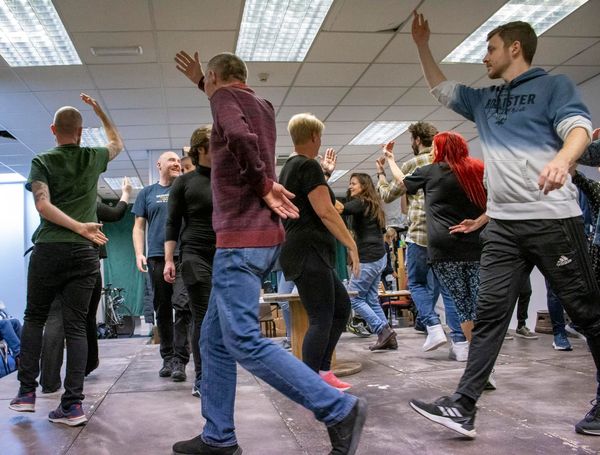
  • Community Theatre is exactly what it says it is, theatre made by the community for the community.

    It’s not looking for the next Kenneth Branagh, nor does it aspire to appear at the Globe Theatre. It is simply local people, most of whom have little or no acting experience, with a desire to put on a show of some kind, and bring people together from the community to do it.

    It’s not an easy thing to pull off, and requires one thing above anything else, and that’s passion. Bucket loads of it.

    It’s not glamorous in any sense, it only looks to make enough money to keep going, and thrives on co-operation between local like-minded people. It borrows from Peter to pay Paul, and what it usually borrows is a skill here or a favour there. For example, someone adept at handy needlework to help make a costume, maybe an electrician willing to fix some dodgy wiring non-gratis, possibly someone giving up a few hours to sell tickets or make tea. Or both, or more. In short, a myriad of give and take gestures with the emphasis very much on the give.

    But it also gives back. When it works well, it gives people opportunities to shine, to step out of areas that keeps them comfortable, make close friendships, build confidence. It thrives on encouragement, resilience, and laughter. Lots of laughter.

    In my home town of Prescot in Merseyside, such a community theatre company has been resident since 2014. Imaginarium Theatre, formerly known as Mate Productions, was created by director and CEO Gaynor La Rocca. I first became aware of them properly when I saw them perform ‘As You Like It’ in a gorgeous woodland area in the grounds of St Mary’s Church in Prescot in 2015.

    Since then, they have slowly gone from strength to strength, inspiring children from as young as 5 to get involved, running courses on acting, lantern making, performance drumming and creative writing.

    Adults have become involved who otherwise would never have considered performance art and in doing so have performed across the region and have even appeared at the Edinburgh Festival on two occasions, a marvellous story in itself.

    A Midsummer Day’s Dream

    But alongside of this something miraculous was starting to grow in the background. In the 1590’s, Prescot was home of the first purpose built Elizabethan theatre outside of London. With the nearby Derby Estate being patrons of Shakespeare’s group of players in London over 200 miles south, and an annual three-day cultural event being held in the town in the early 1600’s that drew performers from all over the country, there was mounting evidence suggesting an indelible link to William Shakespeare and Prescot.

    The evidence was so strong that it was suggested a completely new theatre be built in the town. The idea picked up support from Paul McCartney, Dame Judi Dench, Patrick Stewart and Vanessa Redgrave as well as the Royal Shakespeare Company itself.

    Through setbacks and relentless dedication money was raised, and work began on a new theatre in the months before the covid epidemic, based on original plans by architect Inigo Jones in 1629 for a similar London theatre commissioned by Henry VIII and Anne Boleyn.

    Fast forward to 15th July 2022, and the wonderful Shakespeare North Playhouse was opened to the public. To quote from one of my favourite films, Field of Dreams, build it, and they will come. And they have, from all over the region and beyond, drawing rave reviews for the theatre and it’s opening productions.

    It is a stunning, intimate and at times spiritual feeling theatre space that holds at the most 470 people and is made entirely of timber, using not a single nail or screw in its construction. 

    The theatre has lit up my hometown, for so long in the doldrums from a past of big industry long ago diminished. TV crews and national newspapers have come to the town as it forms a trinity from the Globe Theatre in London, Stratford-on-Avon in the Midlands, and Prescot in the north.

    A Community’s Reward

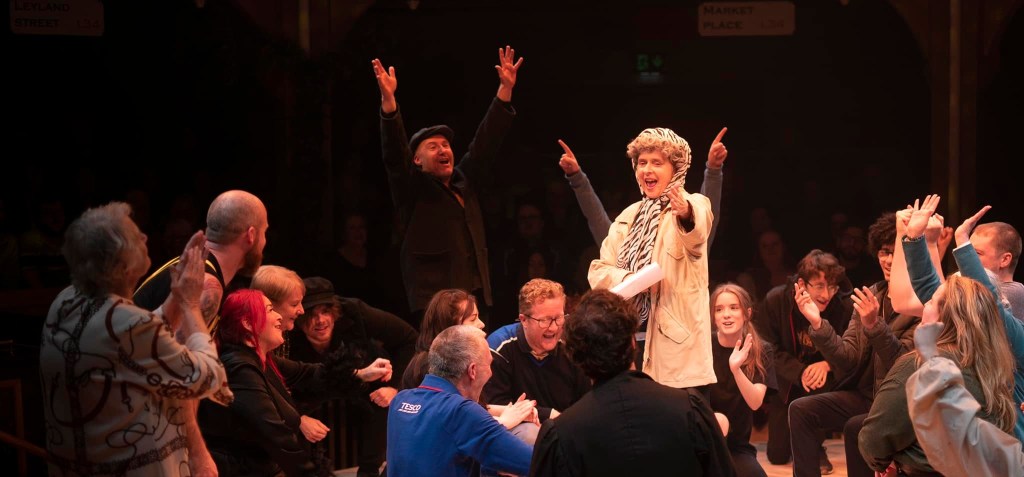
    I started by saying that those in community theatre don’t aspire to the Globe Theatre. But on Tuesday November 2nd Imaginarium Theatre did just as well by putting on a production on this new stage at the Shakespeare North Playhouse. ‘Strange Tale’, an original play having fun with the idea that Shakespeare appears in modern day Prescot through a time portal, is riotous fun and has delighted audiences and reviewers on it’s three-day, five performance run.

    All of the performers were people with normal day jobs, or in the case Vera Farrell, an 86-year-old Great Grandmother. It is a wonderful testament to the influences and opportunities for those involved in Community Theatre. It is also a testament to the total dedication of Gaynor La Rocca and her lawyer turned performer Francesco who also plays the vital real-life role of supportive husband through difficult times, when it seemed like days like Wednesday would never happen.

    But it did happen, and all those involved community theatre everywhere can afford to take a bow.

    (Photographs from Imaginarium Theatre and http://www.visitliverpool.com)